



In 2026, low website conversion rates are rarely caused by a lack of web traffic; they are often caused by conversion friction on the page. When a local business attracts qualified traffic from search engine results pages or local campaigns, visitors decide within five seconds whether to stay on your website, or bounce. If your site suffers from buried contact forms, vague messaging, slow mobile loading speeds, broken trust signals, or a confusing user journey, potential clients will just leave and call a competitor down the street. Fixing these friction points through structured conversion rate optimization (CRO) transforms a static online brochure into a high-performing digital platform that consistently generates high-value inquiries.
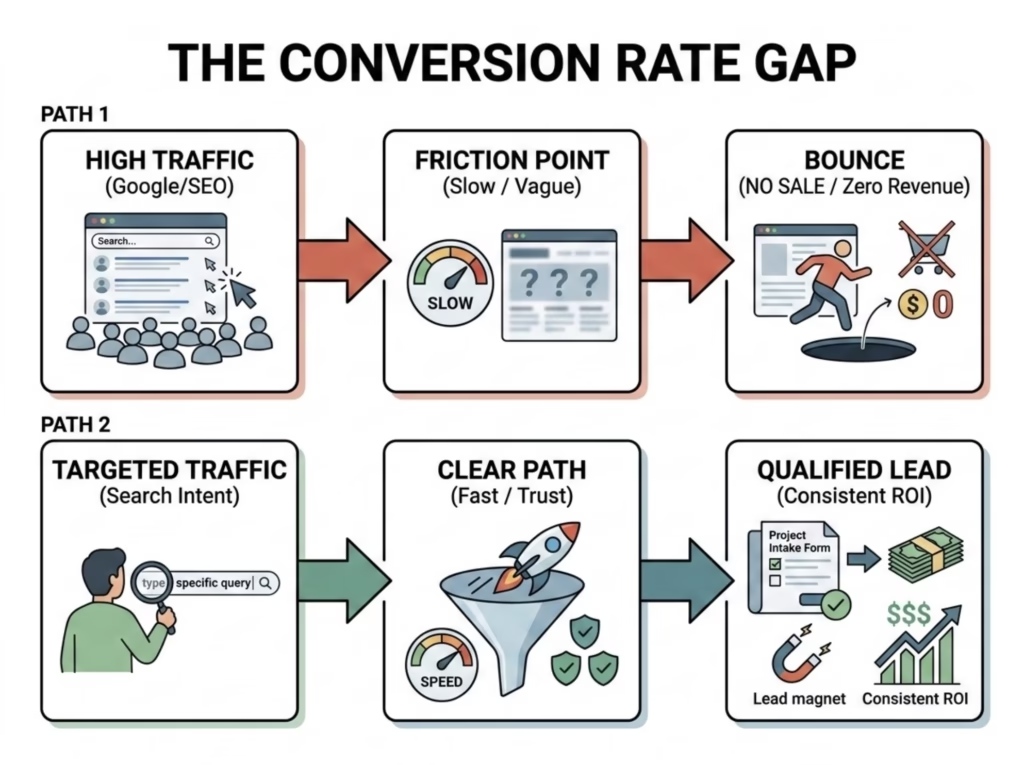
The Saturday Market Foot Traffic Trap
Take a walk down 8th Street during the Capital City Public Market in Downtown Boise on a Saturday morning. The sidewalks are packed with hundreds of people strolling past storefronts, with iced coffees in hand.
Now imagine a local boutique or specialty trade showroom with its front door wedged shut, no prices or descriptions anywhere in sight, and an employee sitting in a back corner behind a curtain waiting for shoppers to guess where the cash register is.
People might glance through the window, but nobody is buying.
Many small-to-mid-sized companies in Idaho treat their digital presence the exact same way. They invest thousands of dollars into marketing efforts, SEO campaigns, and paid ads to push hundreds of website visitors to their digital doorstep. Yet their phone never rings, their contact inbox stays quiet, and the owner throws their hands up thinking: “Online marketing just doesn’t work for our industry.”
The truth? Your marketing is working, your website is just getting in its own way!
Traffic is an invitation; conversion is hospitality. If your online presence creates friction the second someone steps through the door, all that hard-earned visibility goes straight down the drain.
Understanding Macro vs. Micro Conversions
Before fixing conversion leaks, it helps to understand what a conversion actually looks like in modern digital strategy:
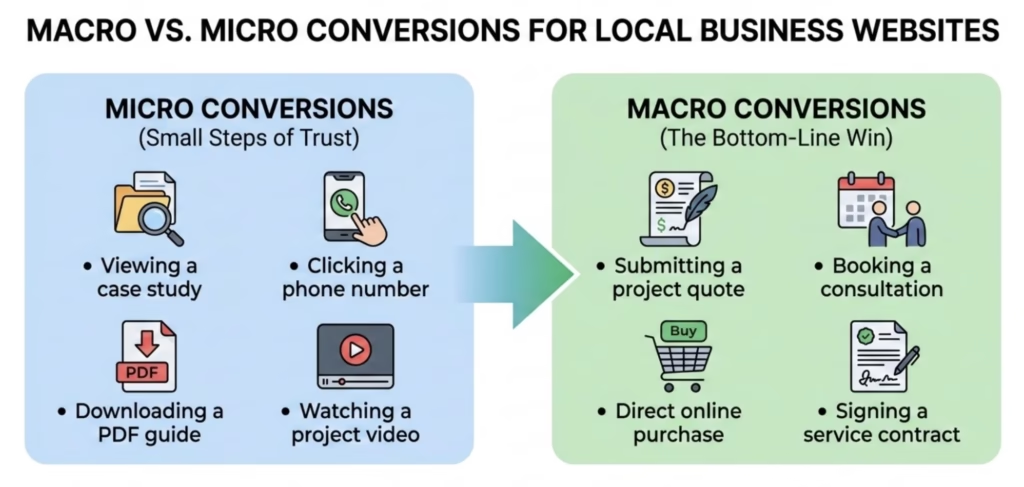
- Micro Conversions: The smaller actions a prospect takes as they explore your brand, like clicking to view past project galleries, reading verified client reviews, watching a walkthrough video, or viewing your pricing structure.
- Macro Conversion: The primary conversion goal of the page, such as a prospect submitting a contact form, scheduling a discovery call, or dialing your office directly.
If your site fails to encourage those micro steps, visitors will never reach the primary macro action.
5 Critical Flaws Killing Your Website Conversion Rates
Over our years working with home builders, specialty trades, and professional firms out of our office in the Alaska Building on Main Street, we routinely see these five mistakes costing companies thousands of dollars in lost business:
1. The Vague “What Do You Actually Do?” Dilemma
When a prospect lands on your homepage or dedicated landing page, they ask three immediate questions:
- Am I in the right place?
- Can this company solve my specific problem?
- What should I do next?
If your hero section features generic slogans like “Building Excellence with Quality Solutions Since 2012,” you haven’t answered anything. Visitors shouldn’t have to decipher what product or service you offer.
Be specific. Instead of vague marketing jargon, lead with direct answers: “Custom Home Builder Serving Eagle & Meridian” or “Commercial Litigation & Business Law in Boise.”
2. Sluggish Page Speed on Mobile Devices
Nothing kills buyer intent faster than a blank white loading screen. Over 60% of local service searches in the Treasure Valley occur on mobile phones. This consists of things like homeowners checking remodelers while running errands, or business managers searching for vendors between meetings.
If your site takes longer than two seconds to load, your bounce rate skyrockets. Uncompressed images, bloated third-party plugins, and cheap hosting environments cause mobile friction.
Optimizing website speed ensures visitors see your craftsmanship instantly, before their patience runs out and they head back to Google.

Loading Time vs. User Drop-Off
| Page Load Time | Probability of Visitor Bouncing |
|---|---|
| 1 to 2 Seconds | Low (Optimal user retention) |
| 3 Seconds | Spikes by +32% |
| 5 Seconds | Spikes by +90% |
| 10 Seconds | Spikes by +99.9% (Total conversion loss) |
3. Missing Proof and Generic Galleries
High-end service clients buy trust before they buy a contract. Uploading an unorganized grid of unlabeled mobile photos to a basic gallery doesn’t prove capability.
Discerning clients look for detailed case studies that explain the project context:
- What was the client’s original problem?
- What architectural or logistical hurdles were overcome?
- Where was the project located (e.g., North End, Barber Valley, Hidden Springs)?
- What was the final outcome?
Adding verified testimonials, neighborhood context, and high-resolution visuals turns passive browsing into active credibility.
4. Buried or Passive Calls to Action
A weak call to action is one of the easiest ways to lose a warm prospect. Hiding your phone number in the footer or placing a single, faded “Contact Us” link at the very bottom of a long page forces users to work too hard.
Every service page needs clear, visible calls to action on your website:
- Keep a click-to-call phone button sticky in the mobile navigation.
- Place a clear primary action button (e.g., “Schedule Your 20-Minute Strategy Session”) above the fold.
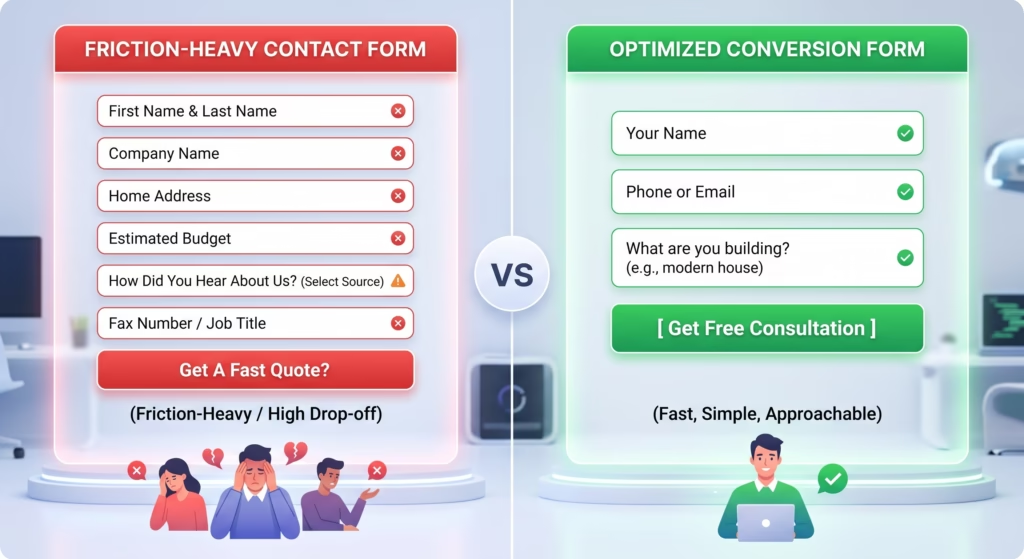
- Shorten contact forms to 3–4 essential fields; asking for unnecessary personal details too early creates hesitation and abandonment.
5. Inconsistent Local Information and Disconnected Listings
A visitor’s journey often starts before they ever see your website. They might find you on Google Maps, local business directories, or online business listings.
If your name, address, and phone number (NAP) details don’t match across these platforms, it creates immediate doubt.
When you optimize your Google Business Profile, ensure your business categories, service descriptions, and operating hours align perfectly with the information on your website. When external directories, review platforms, and search snippets tell a unified story, prospects arrive on your landing pages pre-sold on your legitimacy.
Aligning Traffic Sources with Buyer Intent
Not all web traffic behaves the same way. Driving qualified leads requires matching the intent of your visitor with the structure of the page they land on:
| Traffic Channel | Visitor Mindset | Optimal Page Structure | Primary Conversion Action |
|---|---|---|---|
| Local Organic Search | Seeking an immediate local solution. | Location-specific service page with clear pricing & FAQs. | Direct phone call or consultation form. |
| Targeted Paid Search | Ready to hire; evaluating vendors. | Streamlined landing page with zero distracting external menu links. | Instant estimate calculator or quote request. |
| Referrals & Word of Mouth | Checking credibility and legitimacy. | About page and portfolio highlighting process and values. | Reading reviews & scheduling an introduction. |
| B2B Cold Outreach | Researching credentials after initial contact. | Case study page demonstrating ROI and system frameworks. | Booking a strategy session via direct calendar link. |
For service businesses generating b2b leads, filtering out unqualified traffic early saves valuable administrative hours. Clearly communicating your project minimums, working process, and target customer ensures your incoming lead list consists of highly targeted prospects who are ready to invest.
How to Increase Your Conversions: The 4-Step CRO Framework
At Idaho Websites, we approach digital platforms using three simple pillars: Strategy, Storytelling, and Systems.
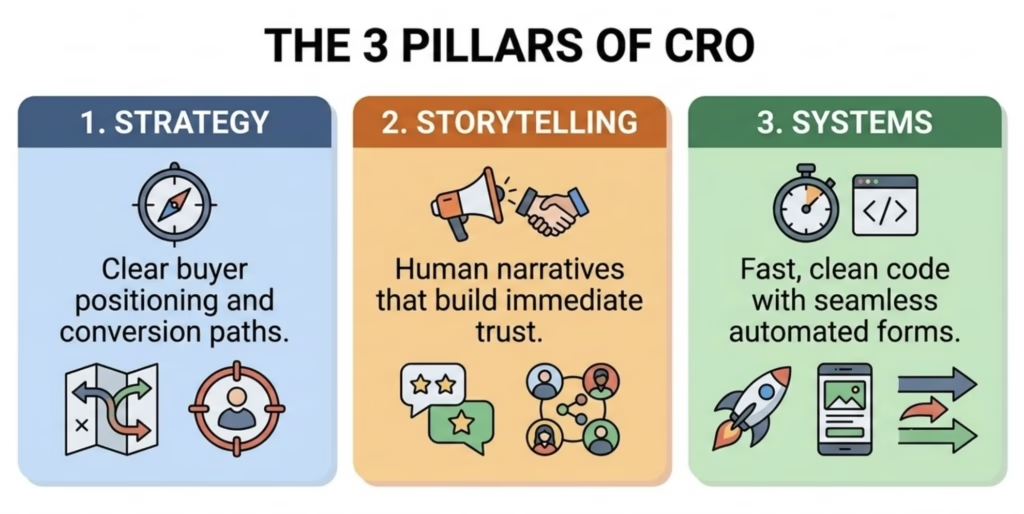
Turning an underperforming site into an active lead engine follows a clear four-step process:
- Audit User Pathways: Look at your analytics data. Where do users drop off? If 70% of visitors land on a service page and leave within 10 seconds, the headline, layout, or load speed is driving them away.
- Clarify the Core Message: Eliminate industry buzzwords. Speak directly to your client’s daily reality. State what you do, who you serve, and how their life or business improves after working with you.
- Streamline Technical Architecture: Strip out heavy page builders and unused scripts. Clean, custom code ensures that buttons click instantly, forms submit without errors, and page layouts stay stable on mobile screens.
- Reinforce Trust Signals: Place client logos, neighborhood badges, licensing credentials, and genuine project photography throughout the user flow.
If your current site has sluggish code or an outdated layout, explore our custom Website Design & Development Services to see how lightweight systems drive higher conversion rates.
Frequently Asked Questions About Website Conversions
What is a good conversion rate for a local service business website?
For most local service providers, specialty contractors, and professional firms, an average website conversion rate typically hovers between 2% and 5%. However, a strategically built website with clean messaging, fast loading speeds, and prominent calls to action can achieve conversion rates between 8% and 15% on local, high-intent traffic.
Why are my Google Ads getting clicks but no leads or phone calls?
If paid ad campaigns generate clicks without conversions, the disconnect almost always lies on the post-click page. Sending paid traffic to a generic homepage forces prospects to hunt for the service they clicked on. Create dedicated landing pages that directly mirror the exact search term, offer a clear value proposition, and provide a single, visible way to contact your team.
How does local SEO improve our website’s conversion rate?
Effective local optimization targets high-intent searchers actively looking to solve an immediate problem in their area (e.g., “emergency commercial plumbing Boise”). Because these visitors are already in a buying mindset, aligning your on-page messaging with their search intent results in significantly higher conversion rates compared to general, untargeted web traffic.
Can we improve our conversion rate without doing a complete website redesign?
Yes. You can often make meaningful short-term gains by rewriting headlines for clarity, shortening contact forms, making phone numbers clickable on mobile, and compressing large image files to improve page load speed. However, if your underlying website framework is outdated, slow, or difficult to navigate on mobile, a clean custom rebuild provides the highest long-term return on investment.
Local Craft, Proven Strategy

At Idaho Websites, we are a founder-led team of dedicated craftspeople working out of the Alaska Building in Downtown Boise. We run a small business ourselves, so we understand the pressure of making every marketing dollar count.
You don’t need a massive corporate marketing budget or complicated software stacks to grow. You need an honest partner who understands how to turn your digital presence into a hard-working sales engine that treats your business like it matters.
Ready to see why your website isn’t generating the leads it should?
We offer a complimentary 20-minute consultation to review your current site layout, identify conversion friction points, and outline practical steps to increase your inquiries.