



In 2026, meta titles and meta descriptions are the digital storefront signs of your business on the internet. A meta title (or title tag) tells search engines and potential customers what your web page is about in roughly 60 characters, while a good meta description provides a compelling 150-to-160-character summary directly below it in search results. Together, these HTML snippets directly determine your click through rate (CTR) on Google search and dictate how AI search engines interpret your services. If your local business doesn’t optimize these very basic tags, you are practically handing qualified local leads over to your competitors down the street!
| Traditional Google SERP Result Breakdown |
|---|
| https://idahowebsites.com > services > seo-aeo Boise Web Design & Local SEO Agency | Idaho Websites Discover lightning-fast, custom websites and strategic local SEO built for Boise businesses. Get found on Google. |
The Digital “Open” Sign in Downtown Boise
Think about the last time you strolled through 8th Street in Downtown Boise on a sunny afternoon. If you were looking for a bite to eat or a local boutique, what stopped you in your tracks? Most likely, it was a clean awning, clear window lettering, and a sidewalk sandwich board telling you exactly what was waiting inside.
If a shop had its windows blacked out with no sign above the door, you wouldn’t bother opening the handle, you’d walk straight to the next business that looked welcoming and clear.
In the digital world, that street is a Google search, and your awning is your meta title and meta description.
When a homeowner in Meridian searches for a custom kitchen remodeler, or an executive along Parkcenter Blvd looks for an estate attorney, their likely starting point is a Search Engine Results Page (SERP). They don’t see your website’s beautiful layout, custom photos, or thoughtful copy yet. All they see are two quick lines of text:
- The clickable headline (the meta title).
- The short explanatory blurb underneath (the meta description).
If those snippets are missing, truncated, or stuffed with confusing tech jargon, prospects won’t click. And in 2026, who actually buys a service or hires a contractor without searching them on Google first?
Anatomy of a Google Search Result
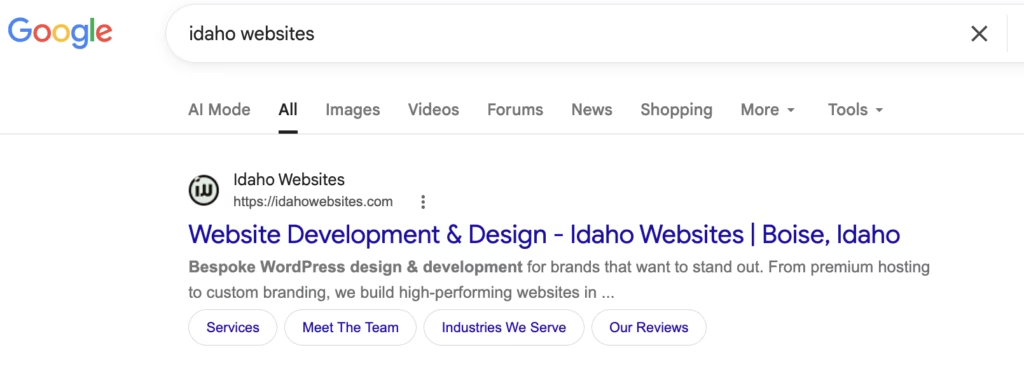
To understand how search engine optimization (SEO) works at the street level, let’s peel back the curtain on how a web page introduces itself to the world.
1. The Meta Title (Title Tag)
Your title tag is the bold, blue clickable link that anchors your search listing.
- Character Guideline: Keep it under 60 characters (or around 580 pixels) so Google doesn’t slice it off mid-sentence with an awkward ellipsis (…).
- Core Purpose: It signals the primary topic of your page to search bots and provides clear anchor text for humans scanning the list.
- Winning Formula: Primary Service + Specific Location | Brand Name (e.g., Custom Home Builder in Eagle, ID | Craft Homes).
2. The Meta Description
Directly below the title tag is the meta description: a short summary between 150 and 160 characters.
- Core Purpose: While Google does not use the meta description as a direct algorithmic ranking factor, it is your primary sales hook. It gives searchers a clear reason to click your site instead of the other nine options on the page.
- Winning Formula: State the problem you solve, reference your local area, and provide an action-oriented call to action (CTA).
Why Local Businesses Must Take SEO Seriously
Many small business owners fall into the trap of thinking: “Our work speaks for itself. We’ve gotten by on word-of-mouth for years”.
Word of mouth is fantastic, but it has a leaky bucket problem. Even when a neighbor at the Boise Farmers Market recommends your company, the very first thing that prospect does when they get home is pull up an iPhone and type your name or industry into Google search.
If your website doesn’t appear, or if your listing looks outdated, abandoned, or broken, that hard-earned referral trust instantly evaporates.
| Offline referral (word-of-mouth) | Online first impression |
|---|---|
| “Call my buddy Dave, he’s the best roofer in Boise!” (High Trust, Zero Proof) | Prospects Google your name. If your SERP snippet is broken, they hire someone else before ever calling. |
Investing in your digital presence connects your real-world reputation with your digital storefront:
- Higher Click Through Rate (CTR): An enticing, benefit-driven description pulls traffic away from higher-ranking corporate directories like Yelp or Angi.
- Elevated Credibility: Clear, professional snippets signal to customers that your business is active, modern, and serious about quality.
- Readiness for AI Search: Modern search engines (and AI engines like Gemini, ChatGPT, and Perplexity) rely on structured meta tags to summarize who you are, what you offer, and where you work.
Explore how search semantics and machine indexing connect by reading our breakdown on SEO, AEO & Search Linguistics.
The Common Mistakes with Meta Tags (And How to Fix Them)
Over our years crafting websites for trade businesses and professional practices on the Boise Bench, we see these four meta tag blunders all the time:
1. The Default “Home” Tag
- The Mistake: Leaving your homepage title tag as Home or Home – My Site Name.
- The Fix: Treat that space like prime real estate. Use: Custom Website Development & Design | Idaho Websites.
2. Keyword Stuffing
- The Mistake: Writing lists like: Boise Roofer, Roofing Boise, Cheap Roof Repair, Best Roofers Idaho.
- The Fix: Write for humans first. Search algorithms in 2026 penalize robotic keyword stuffing. Write naturally: Expert Commercial & Residential Roofing | (Your Business Name) Boise, ID.
3. Duplicate Descriptions Across Every Page
- The Mistake: Copying and pasting the exact same company bio across your Contact, Services, About, and Portfolio pages.
- The Fix: Give every individual page a unique title and description that mirrors the specific intent of that web page.
4. Forgetting the Human Call to Action
- The Mistake: Writing dry, academic definitions that offer zero excitement.
- The Fix: Invite action: “Explore our portfolio,” “Get a transparent quote,” or “Schedule a discovery call today”.
The Bridge Between Technical Code and Human Design
Effective SEO isn’t just adding a few keywords into a WordPress plugin and walking away. It is a holistic craft that ties your front end development, user interface, and server side speed directly into your marketing story.
| Architecture Factor | Legacy / Generic DIY Templates | Idaho Websites Custom Platforms |
| Code Cleanliness | Bloated scripts, missing meta tags | Lightweight, semantic HTML CSS structure |
| Snippet Control | Random text pulled by search crawlers | Handcrafted titles & compelling descriptions |
| Mobile UX | Jerky layout shifts, slow tap responses | Responsive, instant mobile execution |
| Search Readiness | Ignored or treated as an afterthought | Integrated keyword & linguistic strategy |
When our full stack developers build a site, we ensure the technical architecture (from clean code to lightning-fast load times) supports every piece of SEO content on your platform.
Because when a website loads instantly and matches the promise made in its Google snippet, visitors stay, read, and convert.
Frequently Asked Questions About Meta Tags & Local SEO
What happens if I don’t write a meta description for my web page?
If you leave your meta description blank, Google will automatically grab a random snippet of text from your page that matches the user’s search terms. Often, this results in jumbled text, broken navigation menus, or irrelevant cookie policy notices appearing on search pages. Writing your own good meta description gives you full control over your brand’s first impression online.
Does Google always display the exact meta title and description I set?
Not always. Search engines like Google occasionally rewrite snippets based on what an individual user searches for, or if the algorithm thinks your written tags don’t accurately describe the page content. However, having carefully written, keyword-relevant tags gives you the highest probability that Google displays your preferred text.
How do meta tags affect our social media posts when shared?
When you share a web link on platforms like LinkedIn or Facebook, those platforms pull your Open Graph (OG) tags which are directly tied to your meta title, description, and featured preview image. A well-crafted title and description make your links look professional and clickable across all social channels.
How long does it take for Google to update my meta tags once I change them?
Once you update your meta tags using an SEO plugin or through direct code edits, it depends on how frequently Google crawls your site. It can take anywhere from a couple of days to a few weeks for Google bots to re-index your pages and update the live SERP snippet. Submitting your updated XML sitemap through Google Search Console can help speed up that process.
Built with Purpose on the Boise Bench
At Idaho Websites, we are a founder-led team of four dedicated craftspeople who believe business should be human, approachable, and transparent. We don’t drop confusing acronyms just to make ourselves sound smart, and we don’t build cookie-cutter templates that get lost in the noise.
Whether you are launching a new business, or you’re an established brand looking to future-proof your digital presence, we’re here to help you get found, build trust, and grow your audience.
Wondering what your business looks like to Google right now?
We offer a complimentary 20-minute consultation to review your search snippets, audit your speed, and map out a simple, clear strategy for growth.